Airport Emergency Services

Emergency service heroes

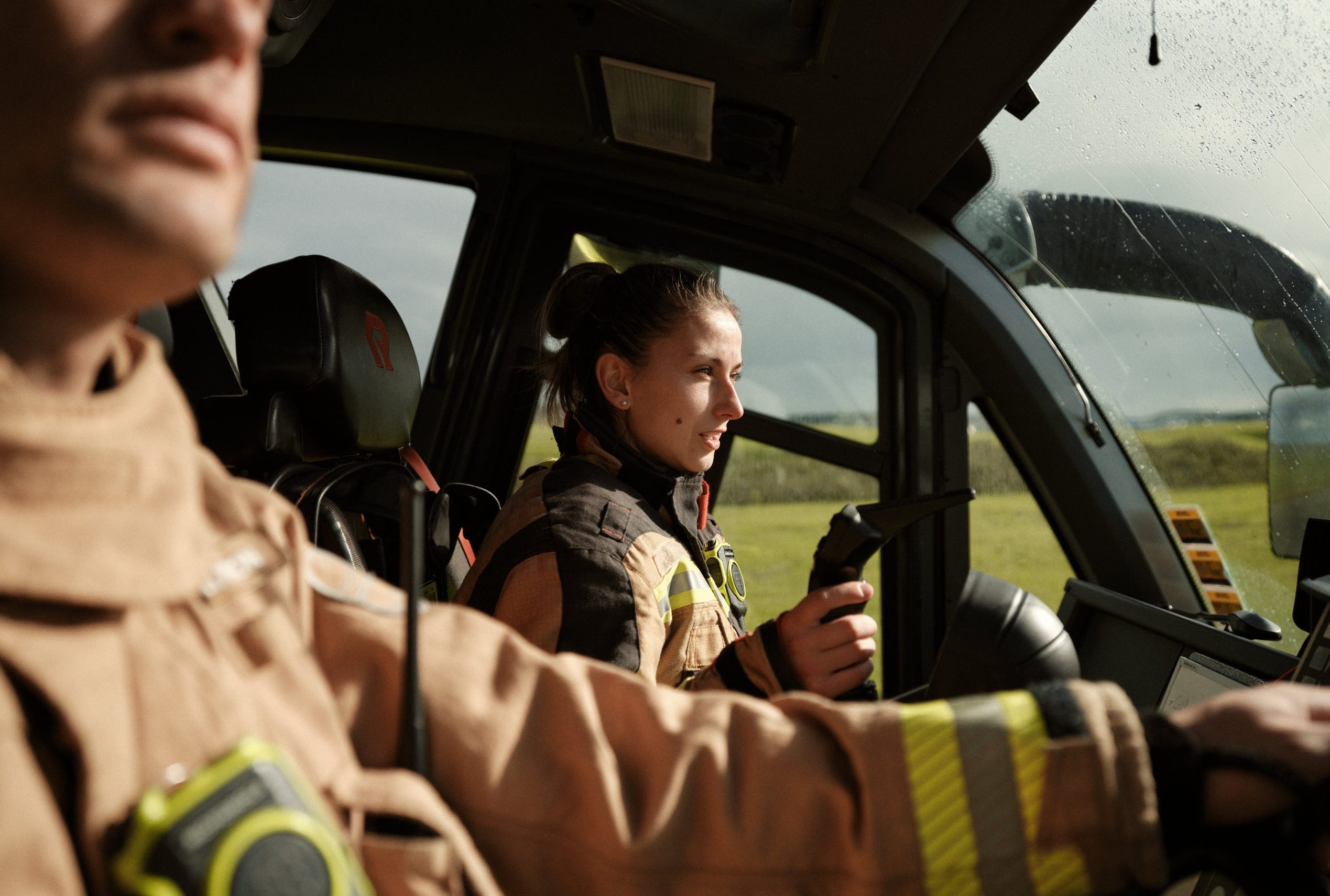
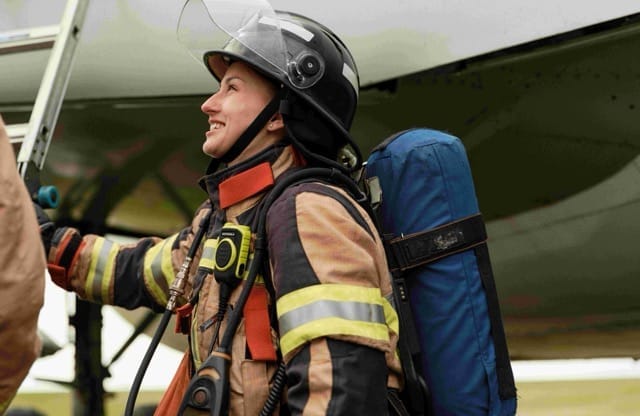
Around the clock, Auckland Airport Emergency Service (AES) are first responders to any medical, fire or rescue situation at the airport precinct. ​It’s a team that strives for professional excellence, with integrity and an ability to adapt.
Always on 24/7​

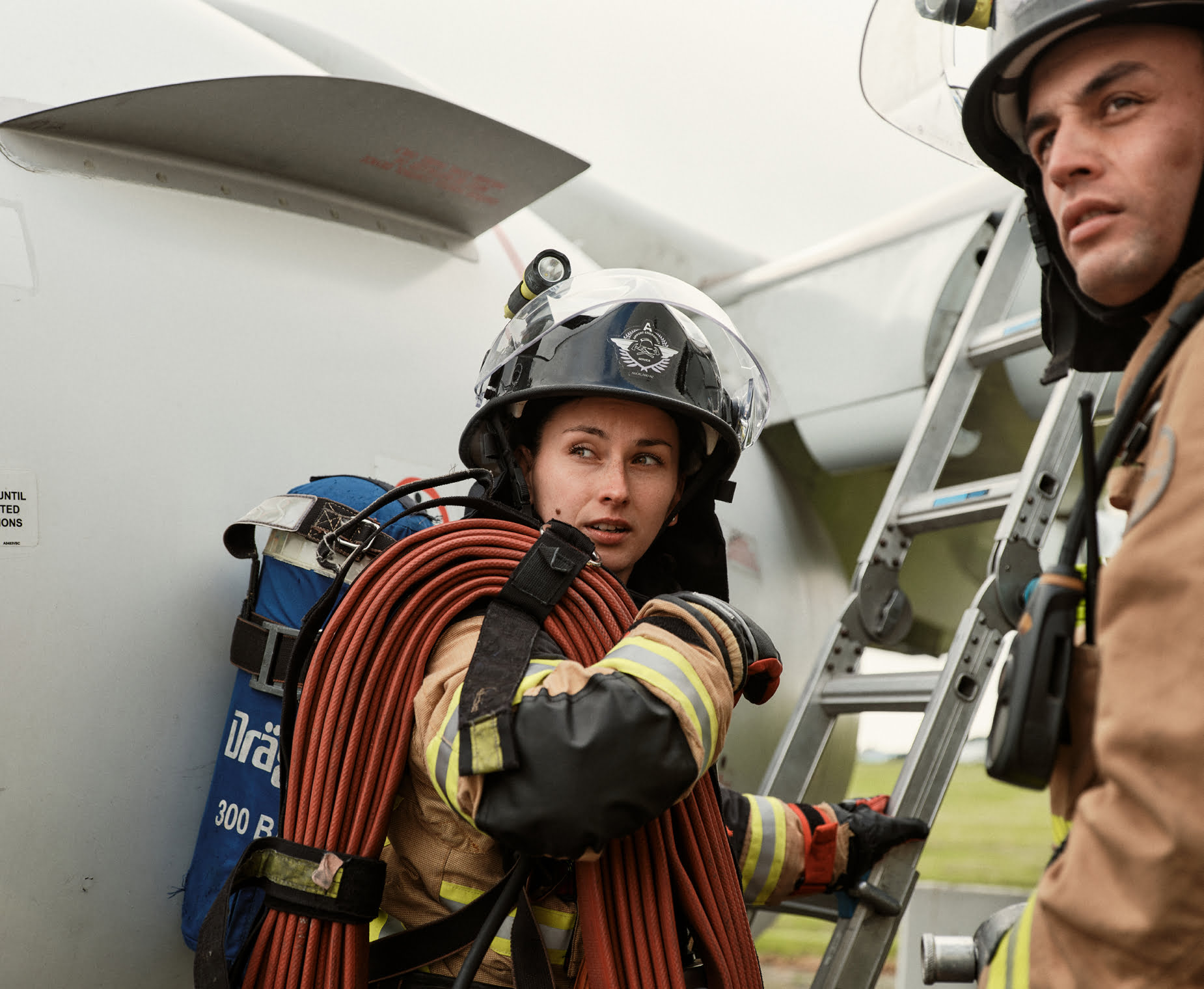
As the largest privately owned fire and emergency brigade in the country, more than 60 firefighters working across four shifts respond to a wide range of emergency situations across the airport precinct, as well as being available for marine rescues on the Manukau Harbour.

We have closed recruitment for the 2026 intake and we will confirm our next recruitment round later this year. We usually start advertising in August for January the following year, although this can move slightly, so please do send us your details if you’re keen.

Join us for our next intake

Auckland Airport Emergency Service (AES) plays a key role at Auckland Airport, employing more than 60 firefighters who are responsible for providing and maintaining rescue firefighting capability at the airport.

At AES, we pride ourselves on professionalism, ability to adapt and integrity. We strive for professional excellence. At Auckland Airport, we are a busy hive of activity, and a lot of what we look for is how you would align with our values.


People first, safety always

We’re ready to respond

Ready to respond
The AES team needs to get to emergency sites as quickly as possible. In dangerous situations, every second counts, so firefighters must think and act quickly to avoid tragedies.


Aviation fire & rescue
Four Rosenbauer Panthers enable us to provide coverage for all flights as required by CAA NZ.

Industrial fire & rescue
Our team respond to all fire and rescue incidents within our 1566-hectare land holding.

This includes motor vehicle incidents, building fires, hazardous material incidents and more.

Medical response
AES provide a medical service where we are often first on scene. Medical call outs make up over 60% of our work.

Marine search & rescue
With two hovercraft and two jet boats, AES are ready to assist with any search and rescue operations within the Manukau harbour.

Physical Assessments


All candidates must pass a standardised test to ensure they can meet the physical requirements of the role. This is done through the Pre Entry Physical Test (PPT). 

The PPT involves a maximal effort beep test to determine the candidates’ aerobic capacity. 

After a brief recovery window, successful candidates must undertake testing of Job Related Fitness Tests through seven evolutions designed to test the candidates’ aerobic fitness, muscular endurance and strength. 


Test 1 – 20 Metre Beep Test 


This test is used to estimate the candidates VO2 max (maximum oxygen uptake). 

The test involves running continuously between two points that are 20 m apart. These runs are synchronized with pre-recorded laptop software, which plays beeps at set intervals. As the test proceeds, the interval between each successive beep reduces, forcing the candidate to increase their speed over the course of the test, until it is impossible to keep in sync with the recording (or, in rare occasions, if the athlete completes the test). If the candidate fails to make the line before the next beep they are given a warning and must make the next 20m before the beep. The recording is typically structured into 21 ‘levels’, each of which lasts around 62 seconds. 

The interval of beeps is calculated as requiring a speed at the start of 8.5 km/h, increasing by 0.5 km/h with each level thereafter. The progression from one level to the next is signalled by 3 quick beeps. The highest level attained before failing to keep up is recorded as the score for that test. Candidates must complete a minimum of Level 8.6 (equating to approx. 42ml/kg/min VO2) to be considered able to advance onto the job related fitness test. 

However, as the selection is competitive, candidates should give themselves every opportunity of advancing by scoring as high as they are able. 

A brief recovery period will be allowed for all candidates. 

Test 2 – Job Related Fitness Tests 

Evolution 1 – Hose reel simulated extension 
Evolution 2 – Equipment / stretcher carry 
Evolution 3 – Horizontal haul 
Evolution 4 – Step block with bandolier 
Evolution 5 – Hose carry and confined space 
Evolution 6 – Step block with bandolier 
Evolution 7 – Ski ERG 

Check out our video playlist for more detail on each evolution

This job requires a high level of physical ability.

The pre-entry physical test and PAC days both contain rigorous physical elements to test applicants and ensure that they are capable of performing the role.

Failure to complete the pre-entry physical will prevent your application progressing further.

The selection process for AES covers several selection phases:

  • Attendance of a practise day (this is optional but recommended)
  • Submission of application
  • Pre-entry physical test
  • PAC day
  • Interview phase
  • Medical and police clearance along with CAA security checks
  • Offer of employment

Before you start your selection process, attendance at a practise session is highly recommended prior to applying for Airport Emergency Service (AES).

The practice session is run over 2-hour blocks, and will allow interested parties the opportunity to get ‘hands-on’ with every component of the Pre-Entry Physical Test. Run in small groups, a practise session allows the opportunity to meet current AES staff, as well as to evaluate yourself before undertaking the Pre-Entry Physical Test as part of the complete selection process.

During a practice session you will participate in a ‘Beep Test’ followed by Job Related Tasks. After which will be the opportunity to ask questions regarding the role, and the selection process.